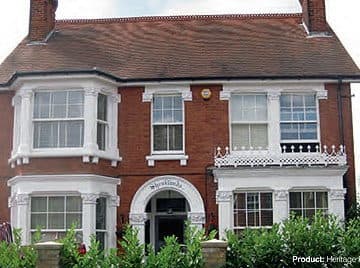
Conservation area and listed are not the same thing
People use the terms interchangeably and they carry very different consequences, so it is worth separating them before you plan anything.
A listed building is protected in its own right, inside and out. Replacing windows almost always needs Listed Building Consent, and the bar is high — you are usually looking at like-for-like timber, sometimes repair rather than replacement. A conservation area protects the character of an area rather than each individual building. Replacing windows is often permitted development, but the local authority may have removed those rights with what is called an Article 4 direction, in which case you need permission.
The practical instruction is the same in both cases: find out which applies to your address before you order anything. The local planning portal will tell you, and so will a conservation officer if you ring and ask.
What conservation officers actually look at
Not the material, in most cases — the appearance. The recurring objections are about proportion and detail rather than what the frame is made of.
Specifically: how deep the frame sits in the reveal, whether the sash sits flush with the frame or proud of it, the width of the glazing bars, whether those bars are genuinely dividing the glass or stuck on the surface, and whether the opening pattern matches what was there. A window that gets those right in uPVC is often accepted where one that gets them wrong in timber is not.
The systems designed for this
Flush-sash systems such as the Residence Collection exist precisely for this problem. The sash closes flush into the frame rather than overlapping it, which reproduces the shadow line of a timber casement — the detail your eye reads as "old window" without knowing why. They are made in heritage colours rather than brilliant white, which is the other giveaway.
For sliding sash windows, timber-alternative systems like the Rose Collection reproduce the proportions of a box sash, including run-through horns, a slim meeting rail and a deep bottom rail. Roseview has been making these since 1985 and conservation officers in this region are familiar with them.
Aluminium has its place here too, but a narrower one: steel-look heritage ranges are the right answer on a 1930s house that originally had Crittall windows, and the wrong answer on a Georgian frontage.
How to approach the application
Talk to the conservation officer before you apply, not after. Most are helpful and would far rather steer you at the start than refuse you at the end. Take the system details, the colour, and a photograph of the existing window.
Where a full-house replacement is likely to be contentious, a common route is to start with the elevations that are not visible from the street — usually the rear — and to match the front later once you have an approved specification on file.
Locally
Stamford is the obvious case: the town centre is almost entirely conservation area with a high concentration of listed buildings, and the Collyweston stone and limestone frontages leave nowhere for a badly chosen window to hide. But it is far from the only one. Parts of Peterborough, plus villages such as Barnack, Uffington, Ketton and Wansford, all carry designations that catch homeowners out.
We have taken window specifications through consent in these areas and can tell you at survey whether what you want is likely to be approved, needs adjusting, or is a non-starter — which is a more useful conversation to have before you have set your heart on something.
Published August 2026 · Updated October 2026 · Written by the Custom Choice team, Peterborough