The difference is strength, and everything follows from it
Aluminium is structurally stronger than uPVC. That one fact explains almost every difference between the two, so it is worth holding onto.
Because the material is stronger, the frame can be thinner while carrying the same weight of glass. So an aluminium window of a given size has slimmer sightlines and more glass than the uPVC equivalent — noticeably so on large openings, barely at all on a small bathroom window. It also means aluminium copes with sizes uPVC cannot reach without a mullion through the middle.
What uPVC does better
Cost, mainly, and it is not a small gap. On a full-house replacement the difference is enough to fund other work.
But there is a second point people miss: on a period property, a good flush-sash uPVC system often looks more appropriate than aluminium. Systems like the Residence Collection are designed to sit flush in the frame the way a timber casement does, with the right depth of shadow line. Aluminium, however slim, reads as modern. On a Victorian frontage that is usually the wrong note.
The cold-aluminium myth, and what changed
Anyone who remembers aluminium windows from the 1980s remembers condensation running down the frames every cold morning. That memory is accurate, and it is the single most common objection we hear.
What changed is the thermal break: an insulating resin barrier running through the middle of the frame, separating the outer section from the inner one so cold cannot conduct straight through. Every aluminium system we fit is thermally broken. It is the reason modern aluminium performs comparably to uPVC on energy, and the reason the old problem does not come back.
Colour, and why it matters more than people expect
Aluminium is powder-coated, which opens up the full RAL range and lets you specify a different colour inside from out — a heritage shade facing the street, something plain facing the room. The finish is baked on rather than painted, so it does not need redoing.
uPVC colour is achieved with a foil, and while the range is now very good, it is a fixed palette rather than an open one. If you have a specific colour in mind and will not compromise, that points at aluminium.
A straightforward way to decide
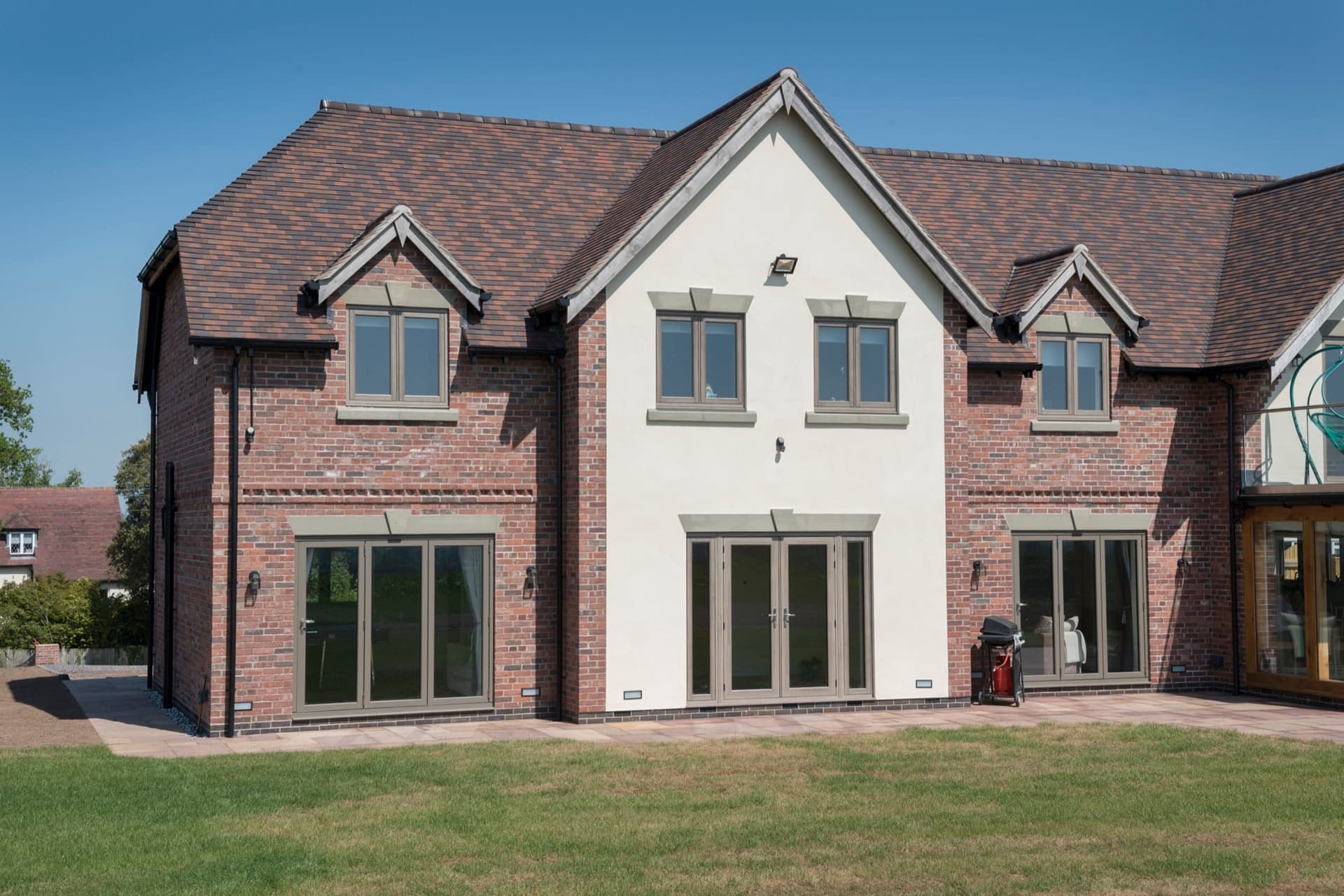
If the window is large, modern, or you want the frame to disappear: aluminium. If the house is period, the windows face the street, or budget is the binding constraint: uPVC, and specifically a flush-sash system rather than a standard chamfered one.
Plenty of houses want both. Aluminium across a rear extension where the glass is the point, flush-sash uPVC on the original front elevation where the brick is. That is a common specification and there is nothing incoherent about it.
Published August 2026 · Written by the Custom Choice team, Peterborough