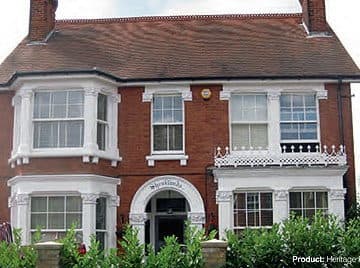
Why Cambridge terraces are their own job
A large share of Cambridge’s housing is Victorian and Edwardian terrace — Romsey and Petersfield off Mill Road, the streets around Histon Road and Chesterton, and pockets all over the city. These houses share a build: solid brick walls with no cavity, timber box sash or early casement windows, and openings whose proportions do more for the street than any other single feature.
That combination sets the brief. The walls do not insulate much, so the windows carry more of the comfort load than they would in a modern house. The originals are often 120 years old and past economic repair. And in much of the city you are not free to fit whatever you like, because a conservation designation is watching the front elevation.
Check the conservation position before you fall for anything
Cambridge has one of the densest concentrations of conservation areas in the country, and they reach well beyond the college core — parts of Mill Road’s hinterland, Chesterton, Newnham and De Freville all carry designations. Whether replacement windows need consent depends on your exact address and whether an Article 4 direction applies to it, and the only reliable answer comes from the city council’s conservation team or the planning portal, not from a salesperson on your sofa.
The practical pattern we see approved: like-for-like proportions, sashes that actually slide, glazing bars that divide the glass rather than sit stuck on top of it, and frames that sit at the original depth in the reveal. Get those right and well-designed timber-alternative systems are regularly accepted; get them wrong and even timber can be refused. The general rules are in our conservation-area guide — this is how they land on a Cambridge terrace specifically.
The sash question, honestly
On a terrace with original box sashes, the right replacement is almost always another sliding sash — the proportions are the house. The decision is material.
- Timber-alternative sash (the Rose Collection)
- Reproduces the box-sash grammar — run-through horns, slim meeting rail, deep bottom rail — in uPVC that does not need repainting every five years. Roseview has made these since 1985 and conservation officers in this region know them. For most Cambridge terraces this is the sweet spot of authenticity, performance and upkeep.
- Flush casement (the Residence Collection)
- Where the house had casements rather than sashes — common on the Edwardian ends of these streets — a flush-sash system closes level with the frame the way the timber originals did. A standard chamfered uPVC casement, with its stepped face, is the detail that makes a period frontage look wrong without anyone being able to say why.
- Repair instead
- If the boxes are sound and only the sashes are tired, overhauling and draught-sealing the originals is a legitimate answer, and on a listed building it may be the only one. We fit replacements, so take it as it is meant: sometimes the honest advice is that you do not need us yet.
Noise: the Mill Road problem
Many of these terraces sit on or near busy roads, and noise is often as big a motivator as heat. New sealed units with acoustic laminated glass and properly brush-sealed sashes make a real difference — the whistling gaps around a worn sash are usually a bigger culprit than the glass itself.
Worth being straight about the limit: for pure noise performance on a genuinely loud road, secondary glazing beats any replacement window, because of the deep air gap. We do not fit it, and for most streets a well-sealed replacement is the better all-round answer — but if you are on the loudest stretch and noise is the whole problem, read our secondary glazing guide before you spend.
Solid walls, condensation and ventilation
Sealing up a solid-walled Victorian house changes how it breathes. The draughty originals were accidentally ventilating the place; airtight new windows without a ventilation plan can move moisture onto the coldest surfaces you have left. Specifying trickle vents properly — required on replacements under current regulations — and using them is not a formality in these houses, it is what keeps the mould off the reveals.
It is also why we survey rather than quote from photographs: reveal depth, wall condition and existing ventilation all change what should be fitted, and a terrace that has already had external or internal wall insulation changes the answer again.
How this works from Peterborough
Cambridge is about 45 minutes from our Fengate showroom and we fit across CB1–CB5. The survey is free and unhurried, the quote is written and itemised, and the fitters are employed by us — the same team on a Romsey terrace as on a village barn conversion. If you want to see and work a full-size sash before deciding, the showroom has them on display.
Published August 2026 · Written by the Custom Choice team, Peterborough