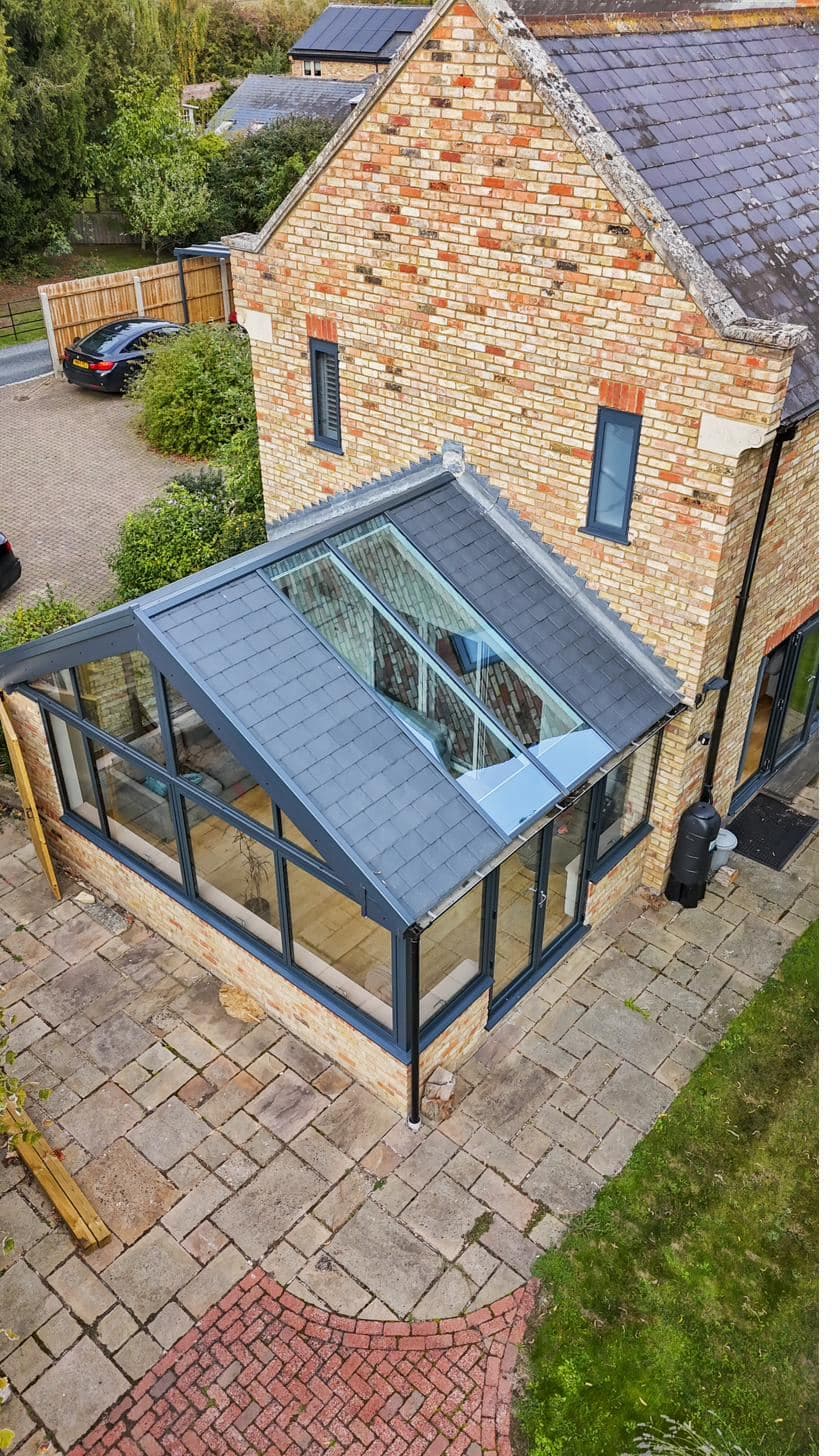
One difference explains most of it
Ignore the marketing names for a moment and look at the roof. A conservatory has a fully glazed roof. An orangery has a mostly solid roof with a glazed lantern in the middle. An extension has a solid roof, with roof windows if you want them.
That single variable drives everything else: how much daylight you get, how the room behaves in July and January, what it costs to heat, whether it needs Building Regulations approval, and whether it reads from the garden as part of the house or as something attached to it.
What each one is genuinely best at
None of the three is the premium option. They solve different problems, and the right one depends on what the room is for.
- Conservatory
- The most light by a distance, the lowest cost, and the quickest to build. Best where you want a bright garden room and can accept that it will always be the warmest room in summer and the coolest in winter, even with modern glazing.
- Orangery
- The middle ground, and the one most people actually want once they have seen both. Brick or rendered pillars and a solid perimeter roof give you wall space, a plastered ceiling and stable temperatures, while the lantern keeps the room bright. It reads as part of the house rather than an addition.
- Extension
- A room like any other room, with full wall space for units or a sofa against every wall. The right answer if this is becoming a kitchen, a bedroom, or anything where you need the walls more than the light.
The question that settles it
What is going in the room? If the answer involves kitchen units, a television, bookshelves, or a bed, you need walls, and a conservatory has almost none. If the answer is a table, chairs and plants, the light matters more than the walls and a conservatory does the job for less money.
The second question is when you will use it. A room you want on a wet Tuesday in February is a different brief from a room you want on a summer evening, and it is the one people most often get wrong — usually by specifying in May.
Where regulations come into it
A conservatory that is separated from the house by external-quality doors, is at ground level, and stays under the size thresholds is often exempt from Building Regulations. Take those doors away, or make it big enough, and it stops being exempt.
Orangeries and extensions are generally not exempt: they need Building Regulations approval covering structure, insulation, and how the new room interacts with the existing house. That is not a hurdle so much as a process, and it comes with the benefit of a completion certificate your solicitor will want when you sell.
Planning permission is a separate question again. Many single-storey rear additions fall under permitted development, but that depends on size, height, boundaries and whether your property has had its rights removed.
The cost conversation, without numbers
The order of expense is predictable: conservatory, then orangery, then extension. But the gaps are smaller than people expect at the top end and larger at the bottom, because what drives the price is groundwork and structure rather than glass.
The thing worth weighing is running cost as well as build cost. A cheap conservatory you stop using in November is more expensive per usable hour than an orangery you sit in all year — which is the calculation behind most of the conservatory roof replacements we get called out to.
Published August 2026 · Written by the Custom Choice team, Peterborough