Building Regulations are not planning permission
These get conflated constantly and they are entirely separate systems. Planning permission is about whether you are allowed to build the thing at all — its size, its appearance, its effect on neighbours. Building Regulations are about whether what you build is safe and performs properly: structure, insulation, ventilation, glazing safety and means of escape.
You can need one, both, or neither. A job that sails through planning can still fail Building Control, and plenty of work that needs no planning permission at all still needs Building Regulations sign-off.
Replacement windows and doors: yes, always
Since April 2002, replacing windows and doors has been controlled work. The regulations set minimum thermal performance, require safety glazing in critical locations such as doors and low-level panes, and cover ventilation and escape windows in habitable rooms.
You do not normally apply to the council for this, because a registered installer self-certifies through a competent person scheme — FENSA or Certass. That is what the certificate you receive afterwards is. It is not a marketing document; it is the evidence the work was signed off.
Conservatories: often exempt, but the exemption is narrow
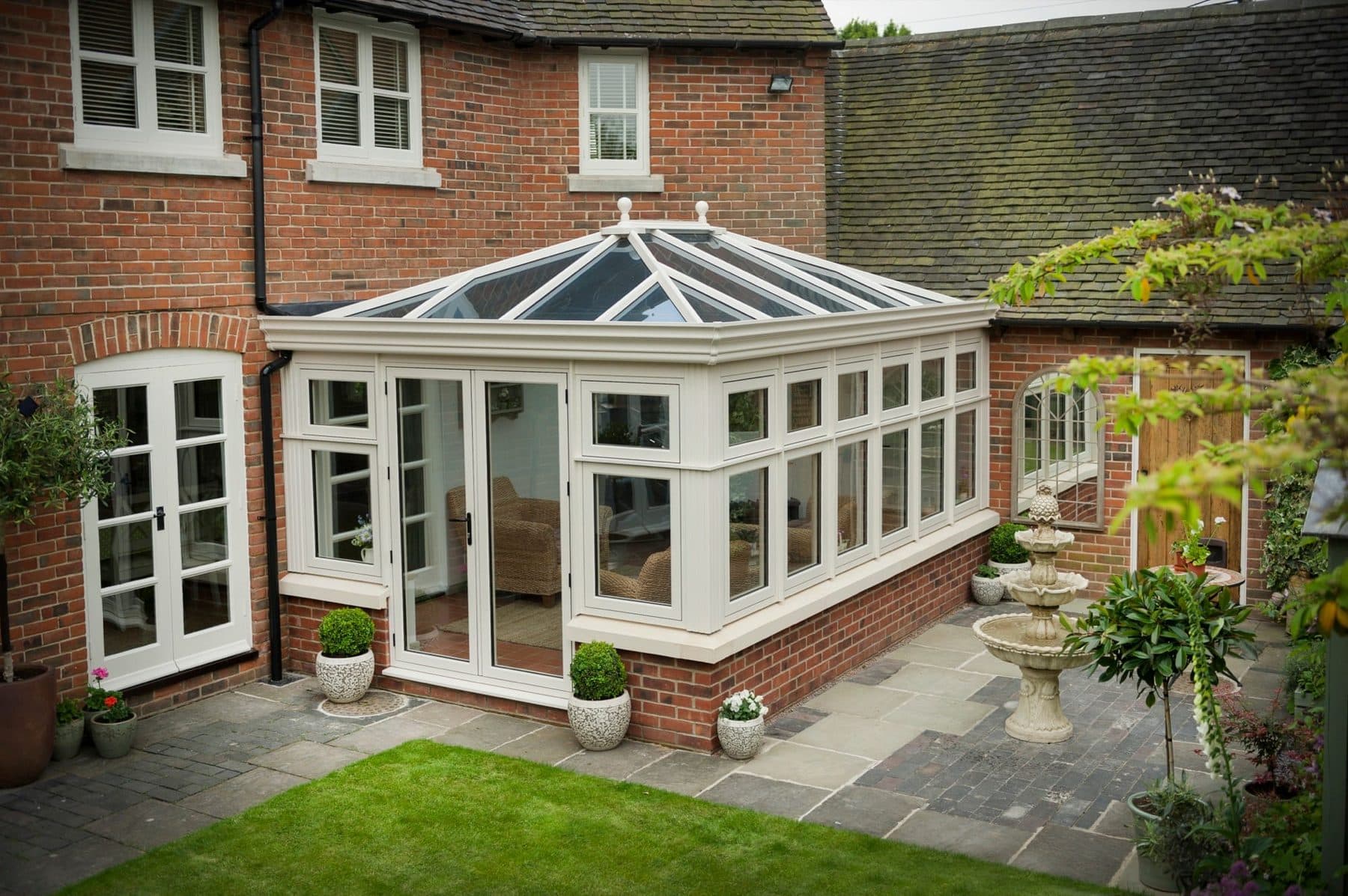
A conservatory can be exempt from Building Regulations, which is a genuine cost and time saving. But the exemption has conditions, and all of them have to hold: it must be at ground level, under the size threshold, separated from the house by external-quality walls, windows or doors, have its own independent heating controls, and have glazing that complies with the safety requirements.
The condition people fall foul of is the separation. Taking out the back doors so the conservatory opens straight into the kitchen is exactly what everyone wants to do, and it is precisely what removes the exemption — because you have just made it part of the heated envelope of the house.
Orangeries, extensions and roof conversions: generally yes
An orangery with a solid perimeter roof, or a single-storey extension, will need Building Regulations approval covering foundations, structure, insulation, damp proofing and drainage.
Replacing a conservatory roof with a solid or tiled one also brings the work into scope, because you are changing the thermal performance and adding weight to a structure that was designed for glass or polycarbonate. This is one of the reasons we survey the existing base and frame before quoting a warm roof — the existing structure has to be capable of carrying it, and that is a judgement made on site.
Why it matters years later
When you sell, your buyer’s solicitor asks for evidence that controlled work was signed off. No certificate means a query, and a query at that stage means either a retrospective application, an indemnity policy, or a buyer using it to renegotiate.
Keep every certificate somewhere you will find it. If you have lost one, the FENSA register is searchable by address, and Building Control keep records of applications.
The short version
Replacing windows or doors: controlled, but handled by us through FENSA and you get a certificate. A separated ground-floor conservatory under the size threshold: usually exempt. Anything with a solid roof, anything opening straight into the house, anything structural: assume approval is needed and budget the time for it.
We will tell you which of these applies to your job at survey, before you commit to anything, including when the honest answer is that what you have described will cost more in process than you expected.
Published August 2026 · Written by the Custom Choice team, Peterborough