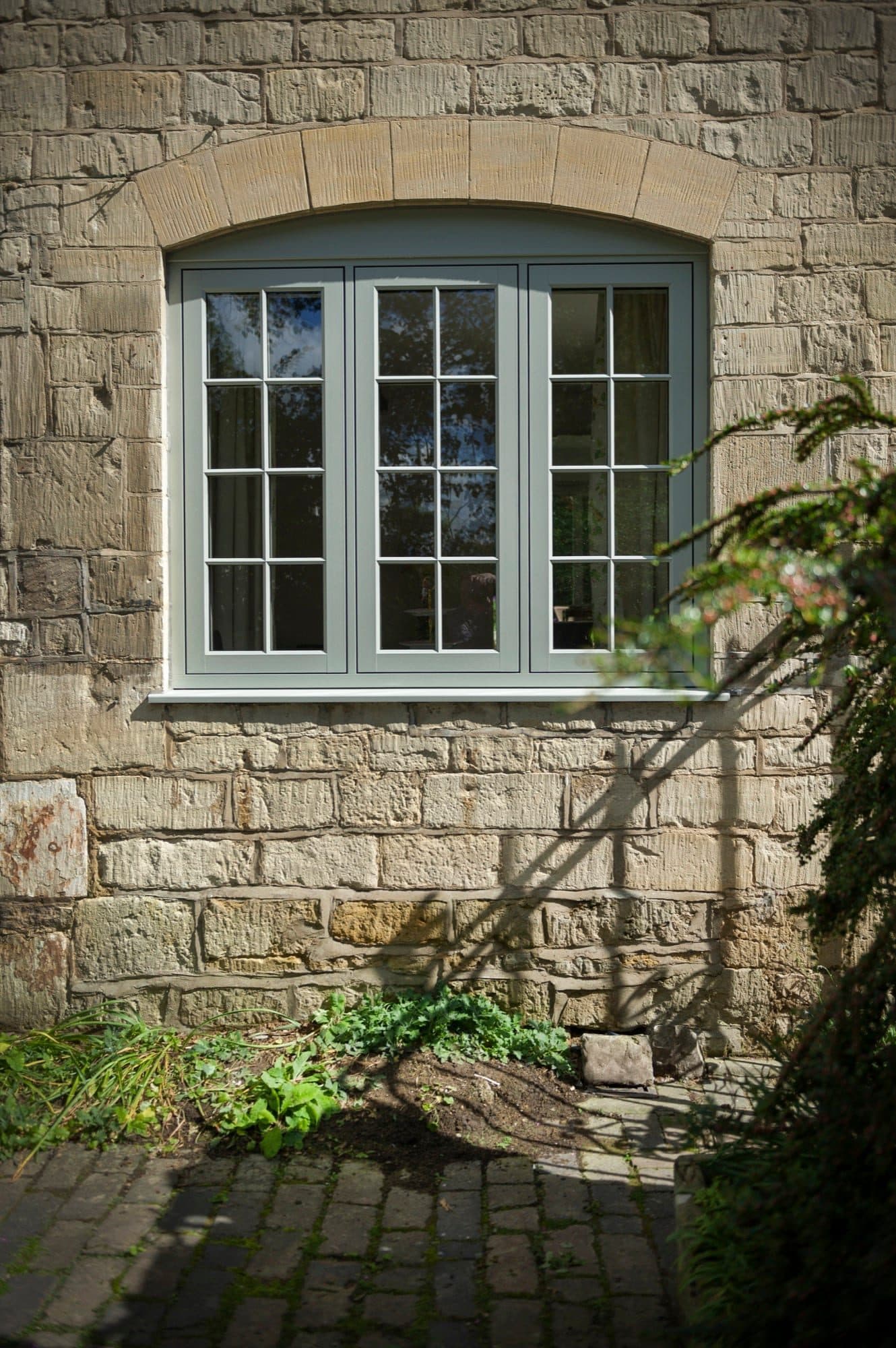
What secondary glazing actually is
An independent pane fitted on the inside of the existing window, in its own slim frame, leaving the original window completely untouched. It is not double glazing and it is not a replacement — it is a second layer with an air gap between.
Because nothing outside changes, it generally avoids the consent problem entirely. That is the whole reason it exists as an option, and why it dominates in genuinely listed buildings where replacement is refused.
Where it beats replacement
Noise, decisively. The wide air gap between the original window and the secondary pane is far better at damping sound than the narrow cavity in a sealed double-glazed unit. If you are on a main road and noise is the problem you are solving, secondary glazing outperforms new windows.
It also preserves genuinely historic glass. If your property has original crown or cylinder glass with the ripple and distortion that comes with age, that is not reproducible and replacing it is a loss. Secondary glazing keeps it.
Where replacement wins
Thermal performance, in most cases. A modern sealed unit with a low-emissivity coating and gas fill outperforms a secondary pane over a plain single-glazed original, and it does so without you having to remember to close a second window.
And then living with it. Secondary glazing means two things to open, two things to clean, and hardware sitting in front of your original window that you will see every day from inside. Well-made systems are discreet; none of them are invisible.
How to work out which applies to you
Establish the constraint first, because it decides everything. If the building is listed, replacement needs Listed Building Consent and the bar is high — secondary glazing is often the pragmatic answer. If you are in a conservation area without an Article 4 direction, replacement may well be permitted, and a sympathetic flush-sash or timber-alternative sash system will usually satisfy the character test.
A lot of people assume they are in the first category when they are actually in the second. It is worth checking with the local planning portal before deciding you cannot have new windows, because the systems designed for period properties have moved a long way and conservation officers in this region are familiar with them.
Being straight about what we do
We fit replacement windows, including the flush-sash and timber-alternative sash systems designed specifically for period and conservation-area properties. We do not fit secondary glazing.
So take the recommendation for what it is: if your property is listed and consent is unlikely, secondary glazing is the right route and a specialist is who you want. If it is a period property that is not listed — which is the large majority of the old houses around here — replacement is very likely open to you, and it is worth finding out before you settle for a compromise you did not need to make.
Published August 2026 · Written by the Custom Choice team, Peterborough