Two Bournes, two different window problems
Bourne splits neatly in two. The town centre and the streets off it are stone and period brick — a conservation-sensitive market town where the question is character. Around it sit the estates built over the last twenty-five years, Elsea Park the largest, where the question is entirely different: the windows the developer fitted are reaching the end of their working life, often sooner than anyone expected.
This guide is mostly about the second problem, because it is the one arriving on doorsteps across PE10 right now. The stone-town side has its own answer, and we come back to it at the end.
Why developer windows wear out early
Windows on a volume-built estate were specified to a build cost, not to a service life. There is nothing scandalous in that — it is how the economics of housebuilding work — but it shows up on a schedule. The common failures we survey on fifteen-to-twenty-year-old estate houses:
- Misted units
- The sealed glazing unit’s edge seal lets go and moisture fogs the cavity. Once one goes, its siblings from the same batch tend to follow over the next few years.
- Dropped sashes and worn friction hinges
- Openers that no longer pull square against the seal — you feel it as a draught along one edge and hear it on a windy night. Sometimes adjustable; often the hardware is at the end of its life.
- Failing gaskets and flattened seals
- The rubber does the sealing for two decades of UV and heat cycling, then hardens. New glass in old gaskets disappoints.
- Discoloured or brittle trims
- Cills, trims and cassettes that have yellowed or cracked — cosmetic until water starts tracking behind them.
Repair or replace — the honest sequence
One misted unit in an otherwise sound window is a glass swap, not a window sale — our condensation guide covers how to tell, and we will say so at survey when that is the answer. The calculation changes when several units have failed, the hardware is worn across the house, and every opener whistles: at that point you are paying repeatedly to prop up windows that were never specified to last, and a whole-house replacement resets everything — glass, seals, hardware, security and guarantee — in one job.
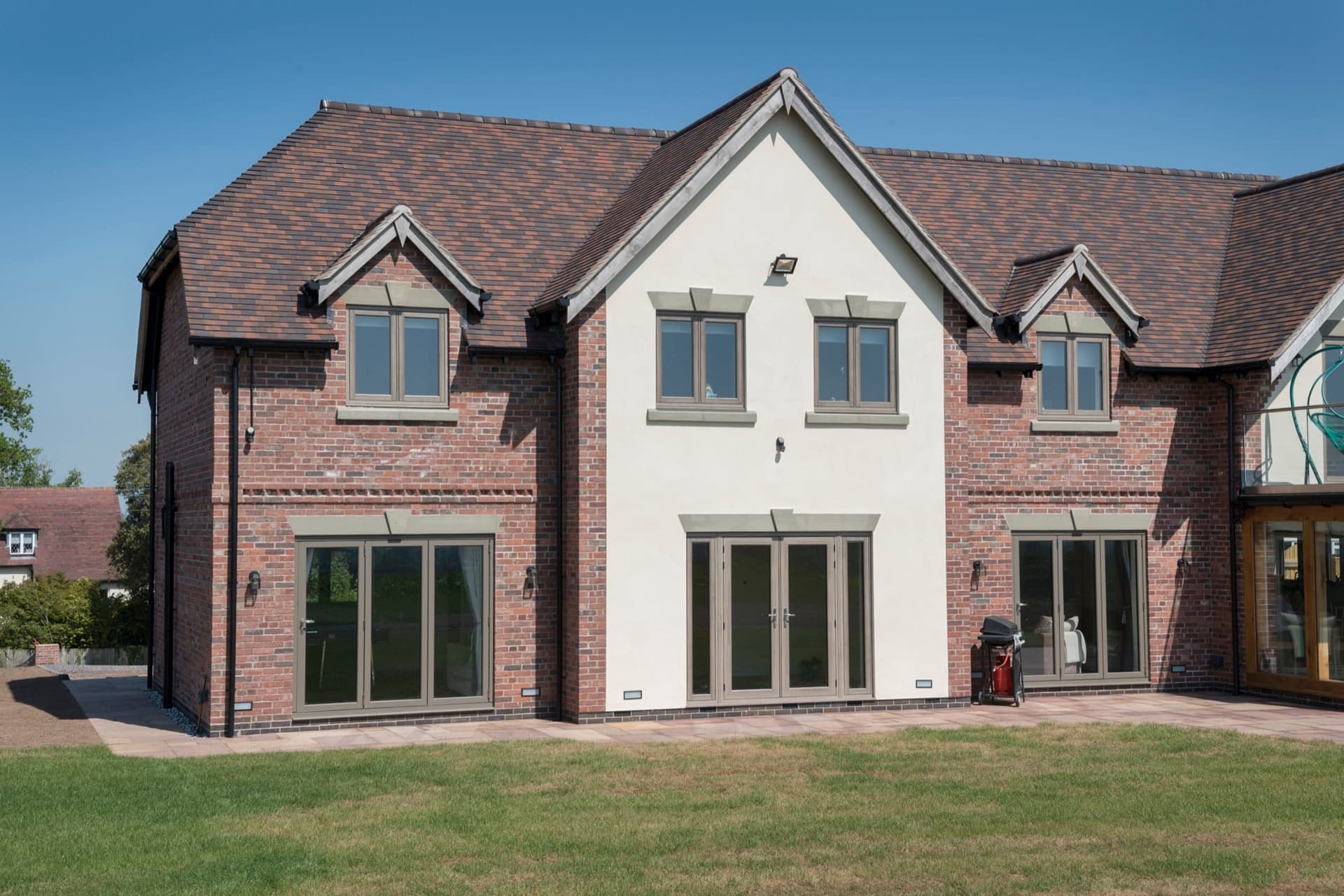
Replacement is also the only route to the two upgrades estate owners actually ask us for: proper A-rated (or better) glazing throughout, and colour. Swapping developer white for anthracite grey or a modern foil, with matching French or bifold doors to the garden, is the single biggest visual change you can make to an estate house — and because the openings are standard sizes and the access is easy, these are among the most straightforward installations we do.
Check the paperwork before and after
Two admin points that matter more on newer houses than people expect. First, if your windows are under ten years old, check your original developer or installer paperwork before spending — there may be residual guarantee cover, and we would rather tell you that than sell you glass. Second, whoever replaces them must register the work with FENSA or Certass and hand you the certificate; on estates where houses sell often, it is the document every buyer’s solicitor asks for.
The stone-town side, briefly
If your house is on the period side of Bourne — the stone frontages in and around the centre — the estate logic above does not apply to you. Character does: flush-sash systems in heritage colours that sit correctly in a stone reveal, and a check on the conservation position before ordering. Our conservation-area guide covers what gets approved and why, and the same survey answers it for your specific address.
And on either side of town, Bourne’s generous plots make it one of our busiest areas for conservatories, garden rooms and conservatory roof upgrades — if the windows are the errand, the garden room is often the ambition. Worth walking both round in one visit.
How this works in Bourne
We are about 25 minutes from Bourne and fit across PE6 and PE10 — estate and stone town alike, with our own employed fitters and a 10-year insurance-backed guarantee on every installation. The survey is free, takes under an hour for a typical house, and ends with a written itemised quote you can compare properly.
Published August 2026 · Written by the Custom Choice team, Peterborough